By Jeff Zorn, Certified Dog Trainer and Canine Behavioral Specialist
There are many reasons why taking your dog to off-leash dog parks is a great idea. As a professional dog trainer with over 10 years of experience working with hundreds of dogs across various breeds and temperaments, I’ve witnessed firsthand the remarkable benefits that off-leash dog parks can provide for our canine companions.
While every dog is unique and some may not thrive in this environment, for many pups, regular visits to off-leash dog parks can be transformative for their physical and mental wellbeing.
In this comprehensive guide, I’ll share my professional insights on why these specialized spaces can be so beneficial, backed by both my personal experiences and the latest in canine behavioral research.
I’ll also provide practical tips on how to ensure these visits are safe, productive, and enjoyable for both you and your furry friend.
Physical Exercise That Far Exceeds Regular Walks
Nothing compares to watching my Black Mouth Cur, Zoe, sprint at full speed across an open field, her body low to the ground as she weaves between trees and jumps over logs with the grace of a canine athlete.
It’s a kind of uninhibited movement that’s simply impossible to achieve during our regular leashed neighborhood walks.
The difference in physical exertion between a structured walk and off-leash play is substantial. During our typical 30-minute leashed walk around the neighborhood, Zoe’s activity level remains relatively constant. Her heart rate stays in a moderate zone, and he covers approximately one mile at my human pace.
In contrast, during 30 minutes at our local off-leash park, Zoe easily covers three to four times that distance. She alternates between sprinting, play-wrestling with other dogs, and brief recovery periods. Her heart rate reaches healthy elevated levels that promote cardiovascular fitness, and she engages muscle groups that rarely get activated during leashed walks.
This intensive physical exercise delivers numerous health benefits:
- Weight management: Off-leash exercise burns significantly more calories than leashed walks, helping prevent obesity, which affects nearly 56% of dogs in America according to the Association for Pet Obesity Prevention.
- Joint health: The varied terrain of most dog parks provides natural low-impact conditioning for joints and paws.
- Cardiovascular fitness: The interval-like nature of play (sprint, rest, sprint again) mimics optimal heart-healthy exercise patterns.
- Reduced destructive behaviors at home: A physically tired dog is less likely to engage in unwanted behaviors like excessive barking, chewing, or digging.
For high-energy breeds like Border Collies, Australian Shepherds, Labrador Retrievers, or Jack Russell Terriers, the intensity of off-leash exercise can be particularly valuable in meeting their substantial energy requirements.
Social Skills Development Through Canine Interaction
I’ll never forget the transformation I witnessed in my previous rescue dog, Bella. When I first adopted her, she would cower behind my legs whenever another dog approached.
After gradually introducing her to our local dog park during quiet hours, she eventually blossomed into a confident, social butterfly who now appropriately greets other dogs with a perfect play bow.
Dogs are inherently social creatures that benefit immensely from regular, positive interactions with other canines. Off-leash parks provide a unique environment where dogs can learn crucial social skills through direct experience:
- Reading body language: Dogs learn to interpret subtle signals from other dogs—the tilt of ears, position of tails, and facial expressions that constitute canine communication.
- Understanding boundaries: Through play and occasional corrections from other dogs, puppies and socially inexperienced dogs learn what behaviors are acceptable.
- Conflict resolution: Dogs develop the ability to navigate disagreements without escalating to aggressive behavior.
- Impulse control: When playing with others, dogs practice restraint and taking turns.
Dog behaviorists often refer to the critical socialization period for puppies (between 3-14 weeks of age), but the truth is that socialization is a lifelong process.
Regular exposure to different dogs helps maintain these skills throughout your dog’s life.
For those with single-dog households, the social benefits of dog parks can be especially valuable.
While we provide love and care as owners, we simply cannot replicate the type of interaction and feedback that dogs receive from their own species.
Mental Stimulation At Off-Leash Dog parks
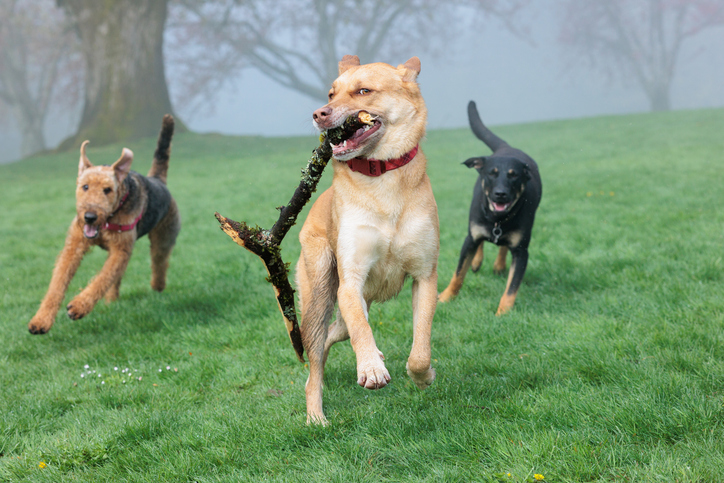
The mental workout my dogs receive at our local off-leash park often proves more exhausting than the physical exercise.
Between investigating new scents, processing social interactions, and navigating changing environments, their brains are fully engaged throughout our visits.
Dogs experience the world primarily through their sense of smell. A single visit to an off-leash park provides a rich tapestry of olfactory stimulation that far exceeds what they encounter in the controlled environment of home:
- Scent exploration: Dogs have up to 300 million olfactory receptors compared to our mere 6 million. The varied scents of other dogs, wildlife, and changing seasonal conditions provide a complexity of input that engages their primary sensory system.
- Problem-solving opportunities: Navigating terrain, figuring out how to engage different play partners, and retrieving toys all require cognitive engagement.
- Environmental adaptation: Processing changing conditions such as weather, new dogs entering the park, or different play equipment engages their adaptive intelligence.
Canine cognition research increasingly shows that mental stimulation is as important as physical exercise for a dog’s overall wellbeing. Dogs that receive regular cognitive challenges show fewer signs of age-related cognitive decline and exhibit fewer problem behaviors associated with boredom.
I’ve noticed that after an hour at the dog park, my dog Zoe is often more tired from the mental workout than the physical one. The combination of social processing, environmental awareness, and sensory input creates a holistic form of stimulation that simply can’t be replicated at home.
Building Confidence in Shy or Fearful Dogs
Years ago hen I adopted my Beagle mix, Charlie, he was terrified of everything—plastic bags, sudden movements, loud noises, and especially other dogs.
Through careful, controlled exposure at our local dog park during quiet hours, Charlie gradually developed confidence that has transferred to other areas of his life.
For many timid dogs, the controlled environment of an off-leash park can serve as therapeutic exposure therapy when approached correctly:
- Graduated exposure: Start during off-peak hours with just one or two calm dogs present.
- Positive associations: Pair park visits with high-value treats and favorite activities.
- Safe retreat options: Ensure your dog has space to move away from interactions when feeling overwhelmed.
- Confidence through competence: Successful interactions build upon themselves, creating a positive feedback loop.
The key to using dog parks for confidence building lies in your approach. Never force interactions or throw your dog “into the deep end” with the expectation they’ll “figure it out.” Instead, view confidence building as a gradual process that unfolds over weeks or months rather than a single visit.
I’ve worked with dozens of fearful dogs through my training practice, and I’ve seen remarkable transformations when off-leash parks are used correctly as part of a comprehensive behavior modification plan.
The natural environment provides opportunities for dogs to make choices, which is fundamentally empowering for anxious canines who often feel they lack control over their environment.
Strengthening the Human-Canine Bond
Some of my most cherished memories with my dogs have been formed at our local off-leash park. There’s something magical about watching your dog experience pure, uninhibited joy—and knowing you’re the one who facilitated that experience.
Off-leash dog parks create unique opportunities to strengthen your relationship:
- Shared positive experiences: Engaging in enjoyable activities together creates positive associations.
- Trust building: Off-leash time requires a foundation of reliable recall and communication, which deepens mutual trust.
- Observational learning: Watching your dog interact with others provides insights into their personality and preferences that might not emerge in other contexts.
- Training opportunities: Real-world distractions at the park create perfect conditions for practicing and reinforcing commands.
The quality of attention we give our dogs during off-leash dog park visits matters significantly. I always encourage owners to put away their phones and be present with their dogs, actively engaging rather than simply supervising from a distance.
This focused attention creates a different quality of connection than what typically occurs during busy home routines.
Many clients in my training practice report that regular dog park visits have helped them understand their dogs better—recognizing subtle body language cues, learning their play preferences, and identifying triggers that might cause stress.
This deepened understanding naturally strengthens the human-canine bond.
Reducing Problem Behaviors Through Proper Outlet
When my Black Mouth Cur, Zoe, went through her adolescent phase at about 8 months old, she developed a fascination with digging up my garden.
After incorporating regular off-leash dog park visits into our routine, the digging behavior all but disappeared.
Many common behavioral problems stem from insufficient physical and mental stimulation:
- Destructive chewing: Often a symptom of excess energy and boredom
- Excessive barking: Can indicate frustration or pent-up energy
- Digging: Natural behavior that intensifies without other outlets
- Attention-seeking behaviors: May develop when energy needs aren’t met
The combination of physical exertion, mental stimulation, and social interaction provided by off-leash parks creates a “perfect storm” of canine fulfillment that addresses many underlying causes of problem behaviors.
I’ve worked with countless clients whose training challenges were significantly reduced once we established a regular off-leash exercise routine.
While the park isn’t a magic solution for all behavioral issues, it’s remarkable how many problems diminish in severity or frequency when a dog’s fundamental needs for exercise, socialization, and mental stimulation are met.
Weather-Resistant Exercise Option
Living in the Florida, I’m intimately familiar with the challenge of keeping dogs exercised during periods of inclement weather.
Our local covered dog park has been a lifesaver during the rainy season, providing a space where my dogs can still run and play without getting completely mud-soaked.
Off-leash parks offer several advantages during challenging weather conditions:
- Many parks offer covered areas or terrain that drains better than typical walking routes
- The intensity of exercise means shorter duration is needed—15 minutes of off-leash play might equal 45 minutes of walking
- Social play generates warmth during cold weather
- Some parks offer water features for cooling during hot weather
For those living in apartments or urban environments, the weather-resistant nature of dog parks becomes even more valuable.
When a quick potty break on the sidewalk is the only alternative, having access to an off-leash area can make the difference between a well-exercised dog and one bouncing off the walls during a week of rain.
I’ve developed seasonal strategies for our off-leash dog park visits: during summer, we visit early morning or evening to avoid heat, while in winter, midday visits take advantage of what warmth is available.
Many parks now offer lighting for evening use during shorter winter days, extending the practical hours for exercise.
Community and Support for Dog Owners
The unexpected benefit I discovered when I began regularly visiting our local dog park was the community of fellow dog enthusiasts.
What started as casual conversations about our dogs has developed into friendships, training exchanges, and a support network of people who understand the joys and challenges of dog ownership.
Dog parks foster community in several meaningful ways:
- Shared knowledge exchange: Tips about local veterinarians, trainers, and pet services
- Breed-specific insights: Learning from others who have experience with your particular breed
- Training motivation: Seeing well-trained dogs inspires ongoing training efforts
- Pet-sitting arrangements: Building relationships with trusted fellow dog owners
- Social connection: Regular visitors often develop genuine friendships
For new dog owners especially, this community aspect can provide valuable mentorship and guidance. I’ve witnessed experienced owners gently offering advice to newcomers about park etiquette and dog behavior in ways that support rather than criticize.
Many parks have developed formal or informal regular meetups—the “small dog Saturday morning crew” or the “after-work weekday regulars.”
These consistent communities create accountability for regular exercise and provide social connection for both dogs and their people.
Cost-Effective Recreation
As someone who has invested in countless dog toys, agility equipment, puzzle feeders, and training classes, I’ve come to appreciate the exceptional value offered by our local off-leash parks, which are free to use in our municipality.
The economic advantages of dog parks include:
- Free or low-cost access: Most public dog parks have no entry fee or minimal annual registration
- Reduced behavioral training needs: Well-exercised dogs typically develop fewer costly problem behaviors
- Potential health care savings: Regular exercise contributes to better long-term health, potentially reducing veterinary costs
- Shared resources: Many parks provide amenities like agility equipment, water features, and large spaces that would be prohibitively expensive for individual ownership
For budget-conscious dog owners, the value proposition of off-leash parks is compelling.
A single professional dog training session in my area costs around $100, while an entire year of unlimited dog park access costs nothing in our public parks and around $35 annually for membership at our premium private dog park.
I’ve worked with many clients who initially contacted me for behavior problems that were significantly improved simply by establishing a regular dog park routine—saving them hundreds or thousands in ongoing training costs.
Special Amenities for Enriched Dog Experiences
The evolution of dog parks over the past decade has been remarkable. What once might have been simply a fenced field has, in many communities, transformed into thoughtfully designed spaces with features specifically created to enhance canine enjoyment and development.
At our premium members-only park, amenities include:
- Swimming areas: Natural or constructed ponds that provide low-impact exercise and cooling
- Varied terrain: Hills, valleys, and different ground surfaces that challenge proprioception and balance
- Agility equipment: Simple obstacles like tunnels, platforms, and jumps that add play opportunities
- Separate areas for size/temperament: Sections designed for small dogs, puppies, or seniors
- Sensory features: Elements like sand pits for digging or brush areas for exploration
- Washing stations: Convenient cleaning options before returning to your vehicle
Even public parks increasingly incorporate design elements that enhance the experience beyond simply providing space. The dedicated dog beach near our home features natural terrain variations, fallen logs for jumping, and shallow water areas perfect for dogs new to swimming.
I’ve noticed that these amenities not only enhance enjoyment but also provide developmental benefits. The varied surfaces improve proprioception (awareness of body position), while features like ramps and platforms build confidence in body movement.
For puppies especially, these early exposures to different textures and challenges help develop well-rounded physical capabilities.
Conclusion: A Cornerstone of Canine Wellbeing
After a decade of professional work with dogs and personal experience with my own pack of four, I’ve come to view regular off-leash park visits not as a luxury but as a cornerstone of canine wellbeing for socially appropriate dogs.
The combination of intense physical exercise, rich mental stimulation, social development, and human-canine bonding creates a holistic experience that addresses multiple dimensions of a dog’s needs simultaneously. Few other activities deliver such comprehensive benefits in a single experience.
That said, successful dog park experiences require preparation and ongoing responsibility:
- Ensure your dog has reliable recall before attempting off-leash time
- Start with basic obedience training to establish communication
- Keep vaccinations current to protect both your dog and others
- Learn to read canine body language to identify when play becomes stressful
- Introduce your dog gradually, especially if they’re inexperienced
- Remain actively engaged during visits, not distracted by phones or conversations
Not every dog will enjoy or benefit from off-leash parks—those with strong prey drives, dog-directed aggression, or overwhelming anxiety may find other activities more suitable.
The mark of responsible ownership is recognizing your individual dog’s needs and preferences rather than forcing experiences that don’t align with their temperament.
For the majority of dogs, however, regular off-leash play represents one of the most efficient and effective ways to meet their complex needs for physical activity, social interaction, and mental engagement.
When approached with knowledge and responsibility, these specialized spaces can truly transform your dog’s quality of life—and by extension, your experience as their human companion.
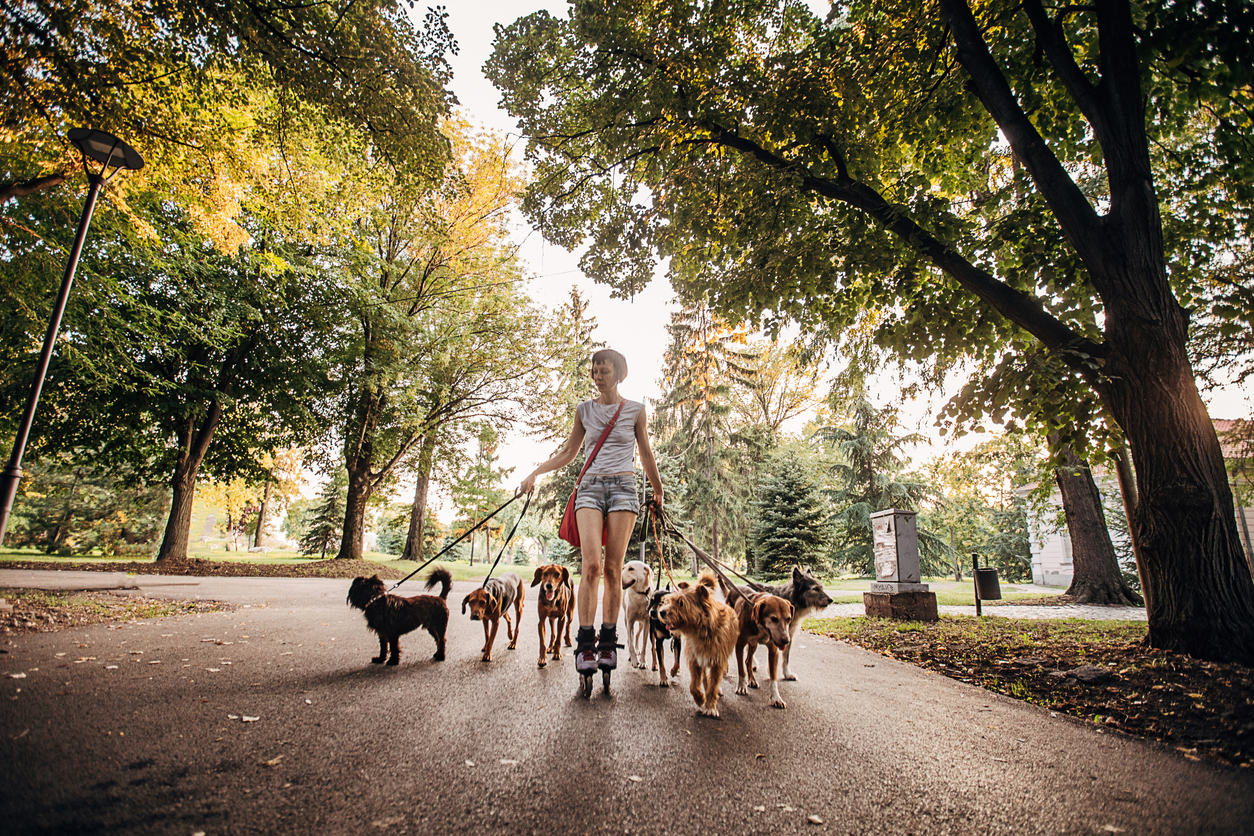
Fortunately, with Pup To Park it’s easy to have your dog taken to the local off-leash dog park for regular trips for exercise and socialization with fur buddies!
Jeff Zorn is a certified dog trainer through the Certification Council for Professional Dog Trainers (CCPDT) with additional specialization in canine behavior modification. When not working with clients or writing about dog behavior, he can be found hiking, boating, or at a local dog park with his rescue dog Zoe.